
FAQ
Dryer Vent Questions
Fire safety, warning signs, cleaning intervals, duct materials and booking — answered straight.
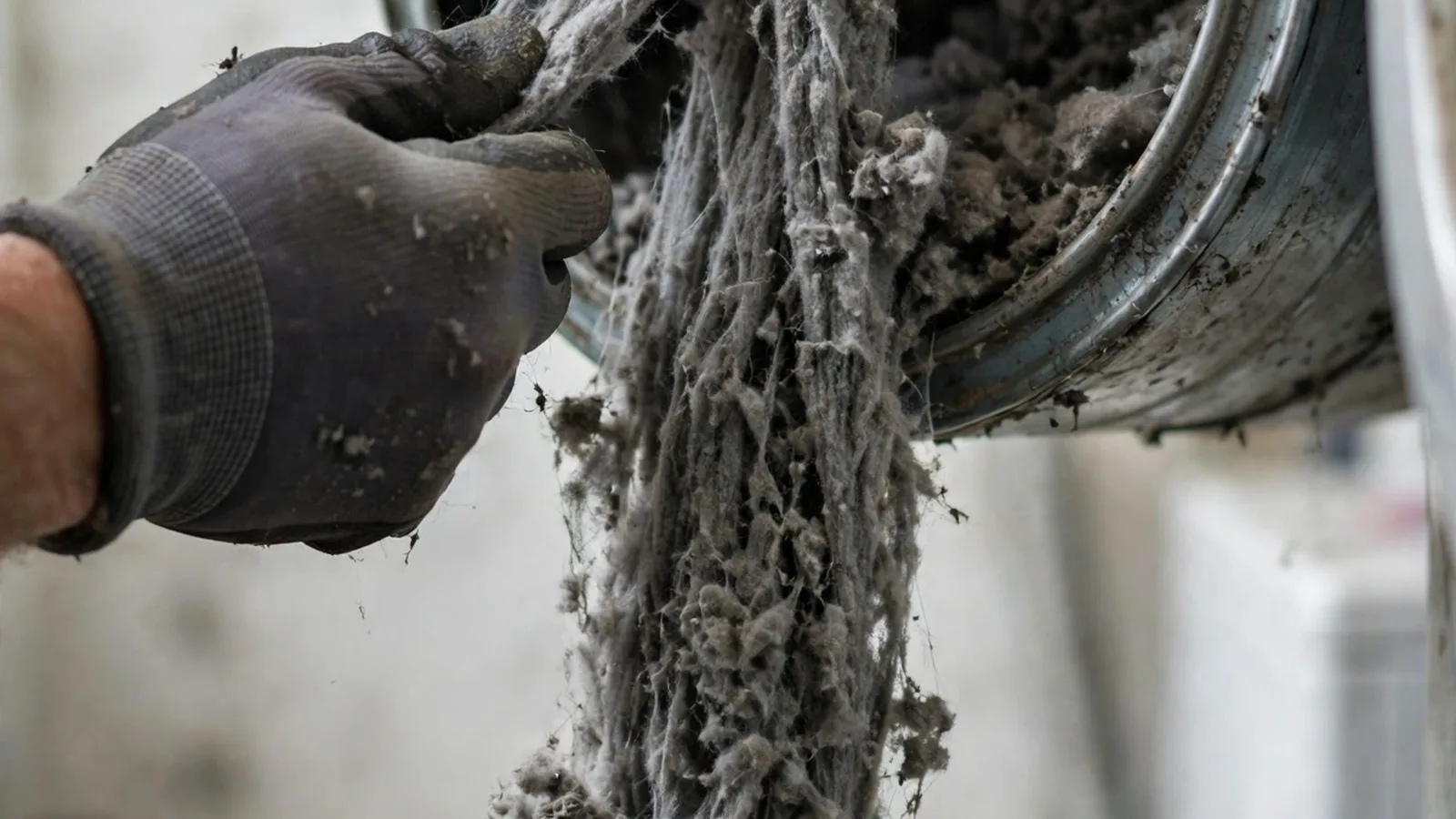
Run the dryer and step outside: the vent flap should swing wide on a strong stream of warm air. A weak twitch — plus slow drying, a hot laundry room, or lint collecting around the dryer — means the line is restricted. If you are not sure, our lint & fire-hazard inspection measures the airflow and gives you a straight answer before you spend on anything.
Once a year for most households. Large families, pet-heavy homes, long vent runs and roof exits build lint faster and benefit from every 6–12 months. The lint trap still needs cleaning after every single load — the vent line behind it is the annual job.
It depends on the length of your run, where it exits and its condition — which is why your exact quote is confirmed free before work begins, with no obligation. This month the Dryer Vent Cleaning Special is running with special pricing — call (855) 640-0404 and ask for it by name.
Most homes take about an hour for a full-line cleaning. Long runs, roof exits and heavy lint loads take a little longer; we give you a realistic window when we arrive.
If lint was the restriction — and it usually is — yes, noticeably. Drying is an airflow job: clear the exhaust path and a healthy dryer goes back to one cycle. The first load after a cleaning is usually the proof.
We serve 196 communities across Maryland, Washington DC and Northern Virginia from our Beltsville base — check your ZIP in the finder above or browse the full service-area list.
Most homes take about an hour. Long runs, roof exits and heavy buildup take a little longer; we will give you a realistic window when we arrive.
You will see the lint we pulled out — and we finish with a live airflow check at the outside cap, with the dryer running, so the result is visible, not promised.
A laundry room that gets hot and humid while the dryer runs, a burning or musty smell, lint appearing around the dryer or on the floor behind it, and drying times that stay long right after a cleaning all point to a break, crush or leak in the line.
Often, yes — many faults sit at accessible joints near the dryer or at the exit. If a section is truly buried, we will show you exactly where it is and talk through the honest options before any wall is opened.
Its ribs trap lint, it sags into lint-collecting bellies, it crushes easily — and plastic/vinyl is flammable and not approved for dryer venting. Smooth rigid metal is the standard because it does none of those things.
Building codes commonly cap a run at about 35 feet, subtracting roughly 5 feet for every 90-degree elbow. Long homes often exceed the practical limit unknowingly — a booster fan or a smarter route is the fix, and we will tell you which.
Scratching or chirping near the laundry room, twigs or grass sticking out of the exterior hood, a flap that no longer moves, and a sudden jump in drying time are the classic signs — especially in spring.
Please don't. Fine screens and mesh clog with lint fast, choke the dryer and create their own fire risk — they are specifically warned against for dryer vents. A proper guard uses wide openings that block birds but pass lint.
Airflow at the cap, lint buildup, duct material and condition, joint integrity and damper function. Together they answer the only question that matters: can this vent move hot air and lint out of your home safely?
No. Plenty of inspections end with 'your vent is in good shape — see you next year.' When work is needed, you see the evidence and a fixed quote, and the decision is yours.
If the laundry room sits mid-house, the vent exits through the roof, or the run visibly travels more than about 25 feet with bends, it's a candidate. Slow drying on a clean, short-looking line is the other clue — we measure before we recommend.
No — a fan is fitted to a clean line. If lint is the problem we clean first; the fan then keeps a long line performing the way a short one does.
Usage decides it: a busy laundromat may need quarterly attention on its hardest-worked runs, while a small salon can run annually. The survey sets an honest interval per site — and high lint load always argues for sooner.
Yes. Commercial work is routinely scheduled outside trading hours, including overnight, so your customers never see us.
Book Your Vent Cleaning
Tell us what you need and we'll call you back to confirm. Rather talk now? (855) 640-0404 — answered 24/7.