
Blog · 2026-11-22
Dryer Vent Maintenance Between Cleanings: The Homeowner's Half of the Job
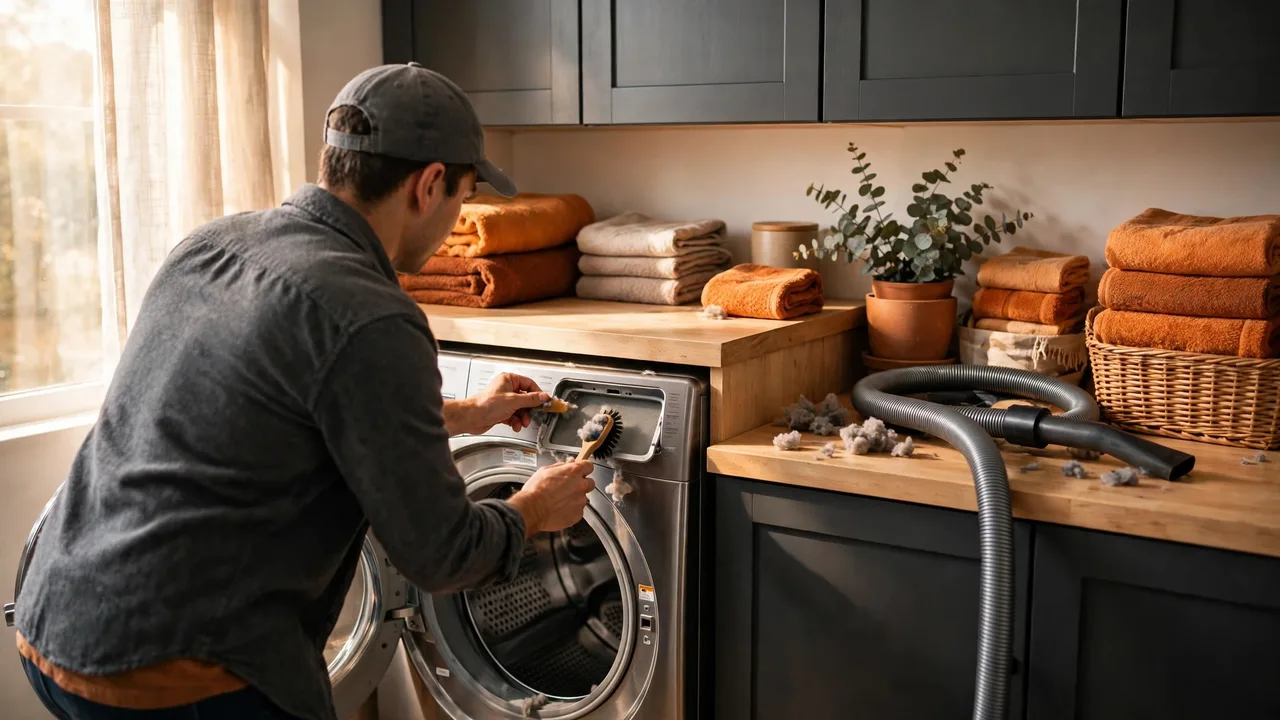
The fast answer: between professional cleanings, your job is small but real. Clean the lint trap after every load, wash the trap screen when water stops passing through it, watch the vent flap swing once a month while the dryer runs, keep the area behind the dryer free of lint, and clear leaves away from the exterior cap. Those habits will not clean the inside of the line — nothing you own reaches it — but they keep a clean vent working like one, and they show you early when it is time to call.
Two jobs, two owners
A dryer vent system has two halves. The hidden half — the duct run inside the wall, ceiling or floor, from the back of the machine to the outside cap — belongs to a service visit: rotary brushes, a vacuum, and an airflow reading at the cap. The visible half belongs to you: the trap, the hose behind the dryer, the cap outside, and the habits that decide how fast lint builds up. Most vent problems we find across Maryland, DC and Northern Virginia grew in the hidden half — but many were announced months earlier in the visible half, where a five-minute check would have caught them.
Every load: the lint trap, done properly
You already know to clean the trap after every load. Do it completely: peel the whole sheet of lint off in one piece, and run a finger along the edges of the screen where lint packs into the frame. A trap that is only mostly clean is a filter that is already partly blocked, and the dryer pushes against it on every cycle.
Once in a while, give the screen the water test. Hold it under a tap. If water pools on the mesh instead of passing through, fabric-softener and dryer-sheet residue has filmed it over — invisible, and surprisingly common. A gentle wash with warm soapy water and a soft brush, then a full dry, restores it. This one small fix has ended more than a few "my dryer is getting old" stories.
Once a month: the five-minute walk-around
Pick a load — towels are a good test load — and while it runs, take a short walk. Start outside. The vent flap or louvers should swing wide on a strong, steady stream of warm air and keep moving for the whole cycle. That swing is your airflow gauge, free and honest. A flap that barely twitches means the line behind it is narrowing, whatever the calendar says about your last cleaning.
While you are out there, look at the cap itself. Clear away leaves, mulch and lint heaped around the hood, and check that the damper closes when the cycle ends. A damper stuck open invites cold air, birds and rodents; the lasting fix is a dryer-vent-rated bird guard, never a fine screen, which clogs with lint. Back inside, glance behind the dryer: lint dusting the floor means the line is full enough to shed, or a joint has loosened — both are worth a call, not a shrug.
Every few months: the slightly deeper jobs
A few times a year, go one step further. Vacuum the floor under and behind the dryer, where lint drifts and settles. Check the short hose behind the dryer: it should be metal, gently curved, and no longer than it needs to be. If it has been crushed by the machine being pushed back, or if it is the white plastic flex that traps lint in every rib, that is a repair worth making — small, quick, and one of the highest-value fixes in the whole system.
Habits that load the vent faster
How you do laundry sets the pace of buildup. Overloading the drum packs clothes so tightly that air cannot move through them, and the cycle runs long against the vent. Heavy lint producers — new towels, fleece, blankets, pet bedding — shed more fibre into the line per load. And the second-cycle habit matters too: every extra cycle is another load's worth of lint pushed into the line and another hour of heat against it.
What your maintenance honestly cannot do
Here is the boundary, stated plainly. Homeowner maintenance keeps the ends of the system clean and the warning signs visible. It does not clean the inside of the run. Lint coats the duct walls, packs into elbows and collects in sagging sections well beyond the reach of a household vacuum — and pushing a short brush in from one end can pack lint deeper instead of removing it. That is why the annual full-line cleaning exists, and why our lint and fire-hazard inspection is visual and airflow-based: we look at the connection, materials, routing and cap, and measure the airflow at the outside vent. We do not claim lab testing — we show you the lint that came out and the reading that changed.
According to the U.S. Fire Administration, clothes dryers are involved in thousands of fires in American homes every year, and failure to clean is the leading factor. Your half of the job — the trap, the flap check, the tidy cap — is how that failure gets caught early in your home.
When a habit becomes a service call
Maintenance has a clear finish line. Book the visit when drying times creep up on loads that used to finish in one cycle, when the laundry room turns hot and humid with the door closed, when you catch a burning smell — stop the dryer for that one and call before the next load — or when the outside flap weakens between one monthly check and the next. Those signs outrank the calendar every time, including ours.
Homeowner in MD, DC or VA doing your half and ready for ours? Call Eagle Dryer Vent Cleaning at (855) 640-0404 — answered 24/7 — or send the lead form on this site and we will call you back to confirm a time to clean the line and prove the airflow at the cap.
Frequently Asked Questions
Clean the lint trap after every load, wash the trap screen when water stops passing through it, watch the outside vent flap monthly while the dryer runs, keep the area behind and under the dryer free of lint, and clear leaves and lint away from the exterior cap.
Hold it under a tap. If water pools on the mesh instead of passing through, fabric-softener and dryer-sheet residue has filmed it over. A gentle wash with warm soapy water and a soft brush clears it — let it dry fully before using it.
While the dryer runs, the exterior flap or louvers should swing wide on a strong, steady stream of warm air. That swing is a free airflow gauge: a flap that barely twitches means the line behind it is narrowing, whatever the calendar says.
No. Homeowner habits keep the ends of the system clean and the warning signs visible, but lint coats the inside of the run — elbows, sags and the far end of the line — beyond the reach of household tools. The full line still needs its annual cleaning.
Want us to check your vent?
Book a cleaning or a fire-hazard inspection — airflow measured, evidence shown, straight answers.