
Blog · 2026-11-27
Gas Dryer? Your Vent Carries More Than Lint and Heat
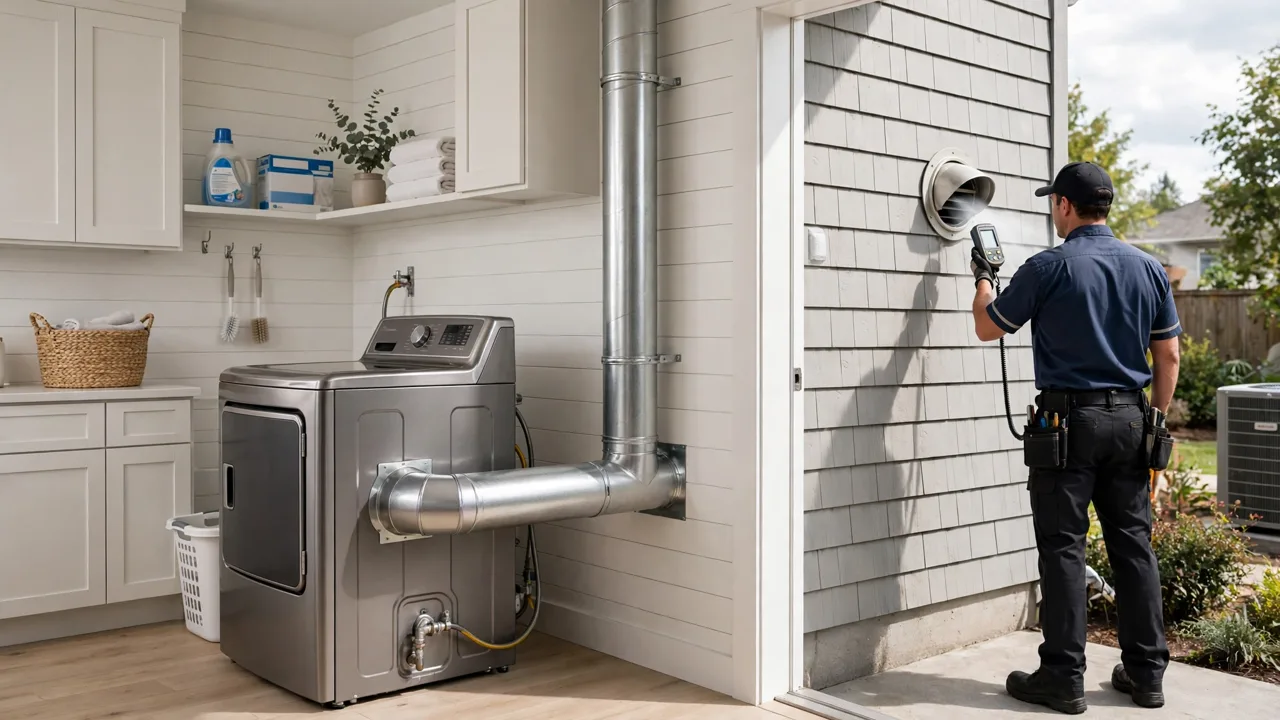
The fast answer: a gas dryer burns fuel to make heat, and its vent is the only path for the exhaust from that burning — along with lint, heat and moisture — to leave your home. If the vent is clogged, crushed or separated inside a wall, that exhaust can spill back into the laundry room instead of exiting outside. Keep the line clean, keep every joint connected, keep a working carbon monoxide alarm near the laundry area, and treat slow drying on a gas dryer as a safety check, not just an annoyance.
What is different about a gas dryer vent
An electric dryer heats air with an element. A gas dryer heats air with a burner. The drying job is the same — hot air tumbles through wet clothes and then has to leave the house — but the air leaving a gas dryer also carries the products of combustion. In a properly working, properly vented dryer, those products travel straight out through the vent line and the exterior cap. The vent is not an accessory on a gas dryer. It is part of how the appliance breathes safely.
That is why the same restriction that merely slows an electric dryer deserves faster attention on a gas one. Lint narrowing the line, a transition hose crushed behind the machine, a joint that has popped apart inside a wall, or a cap packed with a bird nest all push back against exhaust that needs a clear, connected path outside. Homes across Maryland, DC and Northern Virginia often have long or bendy runs — mid-house laundry rooms, roof exits, townhome ceiling runs — and those runs load with lint faster and deserve a stricter cleaning rhythm.
The warning signs are the same — the stakes are higher
Your gas dryer will usually tell you its vent is struggling before anything becomes dangerous. Clothes, especially towels and blankets, take longer than one cycle. The laundry room turns hot and humid while a load runs, because exhaust that should be outside is backing up indoors. The outside flap barely twitches instead of swinging wide on a strong stream of warm air. You notice lint behind the machine, at the exterior hood, or a musty smell from moisture lingering in the line.
A burning smell means stop the dryer and have the line checked before the next load. According to the U.S. Fire Administration, clothes dryers are involved in thousands of fires in American homes every year, and failure to clean is the leading factor. That warning applies to every dryer, and a gas dryer adds one more reason not to shrug off the signs: exhaust that cannot get out cleanly is exhaust that can end up in the room with you.
The separated joint: the hidden gas-dryer problem
The most important gas-dryer finding is often invisible. A vent section can separate inside a wall, ceiling or floor — at a joint that was screwed, poorly taped, or simply worked loose over years of vibration. From the laundry room, everything looks normal. The dryer runs, the room may feel a little warm, and the outside flap may still move a little on whatever air finds its way there. Meanwhile part of every load's exhaust — lint, moisture and combustion products together — is leaking into the structure of the house.
Clues include a laundry room that is hotter or more humid than it should be, lint dust appearing on walls or in unexpected places, and drying that stays slow even though the visible hose behind the dryer looks fine. Finding the real path of the vent — where it runs, where it joins, and where it actually ends — is a core part of a lint and fire-hazard inspection. Our inspection is visual and airflow-based only: we look at the connection, materials, routing and cap, and we measure airflow at the outside vent while the dryer runs. We do not claim lab testing, and we will say plainly if your line is sound.
Five habits for gas dryer owners
First, clean the lint trap after every load, and wash the screen with warm soapy water if water pools on it instead of passing through, because fabric-softener film can coat the mesh and cut airflow. Second, keep the transition hose behind the dryer metal, intact and as short and straight as the space allows — never white plastic flex, and never crushed flat when the machine is pushed back. Third, do the outside flap check regularly: while the dryer runs, the flap should swing wide and close when the cycle ends. Fourth, hold the annual full-line cleaning rhythm — sooner for large families, pet owners and long runs — because a clean line is the clear path combustion exhaust needs. Fifth, keep a working carbon monoxide alarm in or near the laundry area and test it on the same schedule as your smoke alarms. An alarm is a backstop, not a substitute for a clear vent, but every gas appliance in the home deserves that backstop.
When to stop and call for help first
Stop the dryer and get help before the next load if you smell burning, if a carbon monoxide alarm sounds, if anyone in the home feels unwell in a way that lifts when they step outside, or if the outside flap does not move at all while the dryer runs. For an alarm or symptoms, leave the home and use your local emergency or gas utility guidance first — a vent appointment comes after everyone is safe. For the vent itself, a crushed or plastic hose is a repair, a route that is too long or badly bent may need rerouting or a dryer-rated booster fan, and a sound but dirty line simply needs cleaning. The visit should end with evidence: the lint that came out, and an airflow reading at the cap that shows the exhaust leaving the way it should.
Run a gas dryer in your MD, DC or VA home and not sure its vent is clear and fully connected? Call Eagle Dryer Vent Cleaning at (855) 640-0404 — answered 24/7 — or send the lead form on this site and we will call you back to confirm a time to inspect, clean and prove the airflow.
Frequently Asked Questions
A gas dryer burns fuel to make heat, so its vent carries combustion exhaust out of the home along with lint, heat and moisture. A clogged, crushed or separated vent can let that exhaust spill back indoors instead of exiting outside.
Clothes taking longer than one cycle, a hot and humid laundry room, an outside flap that barely moves while the dryer runs, lint behind the machine or at the exterior hood, and any burning smell — which means stop the dryer and have the line checked before the next load.
A vent section can pop apart inside a wall, ceiling or floor at a screwed or poorly taped joint. The dryer still runs, but part of every load's exhaust leaks into the structure. A hot, humid laundry room and lint dust in unexpected places are common clues.
Yes — keep a working carbon monoxide alarm in or near the laundry area and test it on the same schedule as your smoke alarms. It is a backstop, not a substitute for an annual full-line vent cleaning and a clear, connected vent path.
Want us to check your vent?
Book a cleaning or a fire-hazard inspection — airflow measured, evidence shown, straight answers.